




Manufacturing intricate metal components requires careful coordination between engineering design, material selection, and production capability. Components used in industrial machinery, transportation equipment, and other demanding applications may have curved surfaces, detailed mounting features, and dimensional requirements that conventional manufacturing methods struggle to achieve. Investment casting offers an alternative by forming complex shapes in a precision mould rather than relying entirely on material removal. Manufacturers evaluating precision casting solutions, including companies such as Texmo Blank, must consider how tooling accuracy, casting geometry, alloy behaviour, and process control influence the final component. Understanding these factors helps engineers determine where investment casting can provide meaningful manufacturing advantages.
Why Complex Geometries Are Challenging to Manufacture
Complex metal components often include features that conventional cutting tools can’t easily reach. Curved profiles, narrow sections, detailed external surfaces, and certain internal passages may require multiple machining setups or specialised equipment. Each additional operation can increase production time and introduce opportunities for dimensional variation.
Manufacturing challenges increase when these features must meet specified tolerances. Engineers must consider not only the required geometry but also how the selected manufacturing process will reproduce it consistently. Investment casting offers useful design flexibility, but successful production still depends on creating shapes suitable for casting.
How Investment Casting Reproduces Intricate Shapes
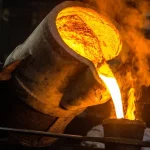
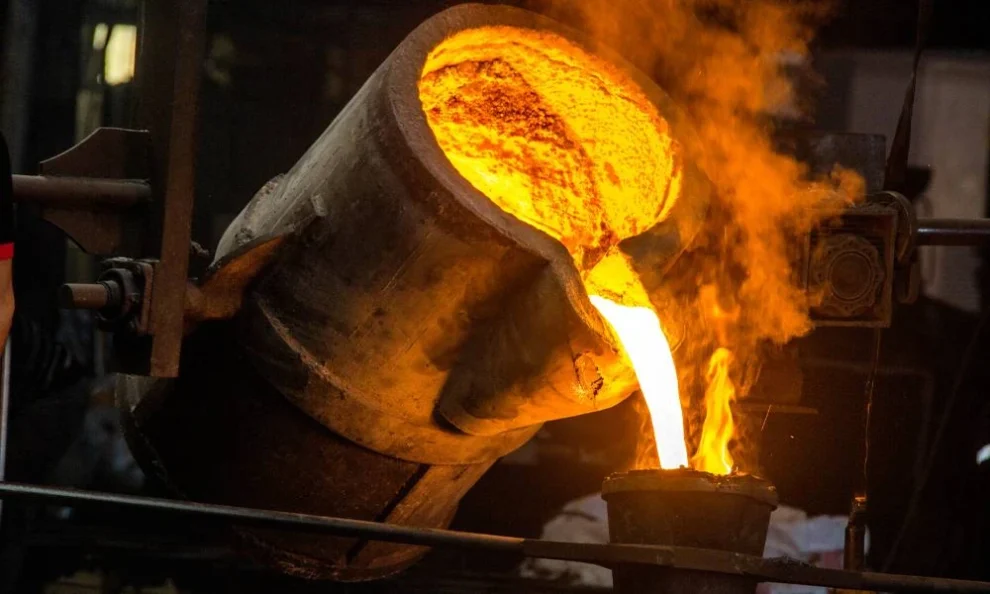
Investment casting begins with a wax pattern that represents the desired component. The pattern is surrounded by ceramic material to form a shell, and the wax is then removed, leaving a cavity. Molten metal fills this cavity and solidifies into a casting that reproduces the pattern’s geometry.
Because the cavity forms around a detailed pattern, the process can reproduce complex external shapes without machining every feature individually. However, several factors influence the final casting, including wax pattern accuracy, ceramic shell behaviour, alloy shrinkage, and cooling conditions. These variables must be considered during tooling design and production planning.
The Role of Wax Pattern Accuracy
Wax patterns are fundamental to dimensional control in investment casting. Significant variation in pattern dimensions can affect the geometry of the finished component. Tooling design must therefore account for expected material behaviour and dimensional changes during manufacturing.
Pattern production conditions, tooling maintenance, and handling procedures can affect consistency. Manufacturers use appropriate process controls to reduce variation and ensure that patterns remain suitable for ceramic shell production. Manufacturers may also incorporate dimensional checks into the manufacturing process to identify issues before metal casting begins.
Understanding Metal Shrinkage
Metal contracts as it cools and solidifies, making shrinkage an important consideration in investment casting design. The amount and behaviour of shrinkage depend on the alloy, geometry, and thermal conditions. Tooling dimensions must account for expected changes so that the finished casting approaches the required specifications.
Uneven cooling can also affect dimensional stability, particularly in components with significant wall-thickness variations. Engineers must consider these effects when designing patterns, selecting casting parameters, and establishing appropriate tolerances. Controlling shrinkage-related variation is key to achieving consistent results.
Managing Wall Thickness and Geometric Transitions
Complex components may contain thin sections, thick structural areas, and transitions between different geometries. These features influence how molten metal fills the mould and how the casting solidifies. Abrupt changes in section thickness can create manufacturing challenges and may increase the risk of certain defects.
Designers should use smooth transitions and appropriate wall thicknesses wherever functional requirements allow. Early consultation with casting engineers can help identify features that may require modification to improve manufacturability. This approach supports reliable production while preserving the component’s intended function.
Achieving Tight Dimensional Tolerances
Investment casting can provide relatively tight as-cast tolerances compared with several other casting processes. This makes it useful for components requiring complex geometry and good dimensional consistency. However, no single tolerance level applies to every investment casting.
Achievable accuracy depends on part size, alloy, shape, tooling, and manufacturing conditions. Identify critical dimensions during the design stage so the manufacturer can determine whether they can be achieved directly through casting or require secondary machining. This prevents unrealistic expectations and helps establish practical inspection criteria.
Reducing Multiple Machining Setups
Machining a complex component may require repeated repositioning to access different features. Each setup adds time and requires careful alignment to maintain dimensional relationships between surfaces.
Investment casting can produce many of these features in the initial casting, potentially reducing subsequent machining operations. This may improve production efficiency and simplify certain manufacturing sequences. Nevertheless, precision interfaces and functional surfaces may still require machining to achieve the necessary accuracy or finish.
Designing Internal Passages and Recesses
Some components require internal channels, cavities, or recesses that are difficult to produce using conventional machining. Investment casting can accommodate certain internal features through suitable ceramic cores or other tooling arrangements.
However, internal geometry adds considerations, including core stability, metal flow, inspection access, and core removal. Not every enclosed feature is practical to cast, and complex passages may require specialised manufacturing methods. Assess feasibility during the early design stage.
Surface Finish and Geometric Detail
The ceramic shell used in investment casting can reproduce detailed surface features from the wax pattern. This can provide relatively smooth surfaces and accurate geometric detail compared with some alternative casting methods.
The final surface finish depends on the alloy, shell materials, casting conditions, and subsequent processing. Where components require very smooth surfaces, controlled textures, or precision sealing areas, additional finishing may still be necessary. Engineers should specify the required surface condition rather than assuming that the as-cast finish will satisfy every application.
Dimensional Inspection and Quality Verification
Producing a complex casting is only one part of the manufacturing process. The finished component must also be inspected to confirm that it meets the required dimensions and acceptance criteria. Depending on the application, manufacturers may use coordinate measuring machines, gauges, optical measurement systems, or other suitable inspection methods.
Inspection planning should consider the component’s functional features and the practical accessibility of measurement points. Complex geometries may require specialised inspection strategies, especially when internal features or critical dimensional relationships are involved. Clear drawings and agreed specifications are essential for effective verification.
Design for Manufacturability in Investment Casting
Design for manufacturability involves developing components that satisfy engineering requirements while remaining practical to produce. For investment casting, this includes considering wall thickness, geometric transitions, tooling requirements, alloy behaviour, and secondary processing needs.
Early collaboration between designers and casting specialists can identify opportunities to simplify difficult features without compromising performance. It can also help determine which tolerances are essential and which may be unnecessarily restrictive. This approach supports better production planning, reduced rework, and more consistent manufacturing outcomes.
Frequently Asked Questions (FAQs) About Investment Casting Tolerances and Geometry
Can investment casting achieve tight tolerances?
Yes. Investment casting can provide relatively accurate as-cast dimensions, although achievable tolerances depend on component size, geometry, alloy, and process controls. Critical features may still require machining.
Why is investment casting suitable for complex shapes?
The process uses detailed wax patterns and ceramic moulds to reproduce intricate geometries. This can reduce the need to create every feature through separate machining operations.
How does shrinkage affect investment casting accuracy?
Metal contracts during cooling and solidification. Tooling design and manufacturing controls must account for this behaviour to achieve the required final dimensions.
Can investment casting produce thin walls?
Investment casting can produce relatively thin sections in suitable designs. Feasibility depends on the alloy, geometry, metal flow, and manufacturing process, so confirm the minimum wall thickness with the manufacturer.
Is machining still required after investment casting?
Machining may still be necessary for critical dimensions, threaded features, precision interfaces, or specialised surface requirements. The amount of machining depends on the component specification.