





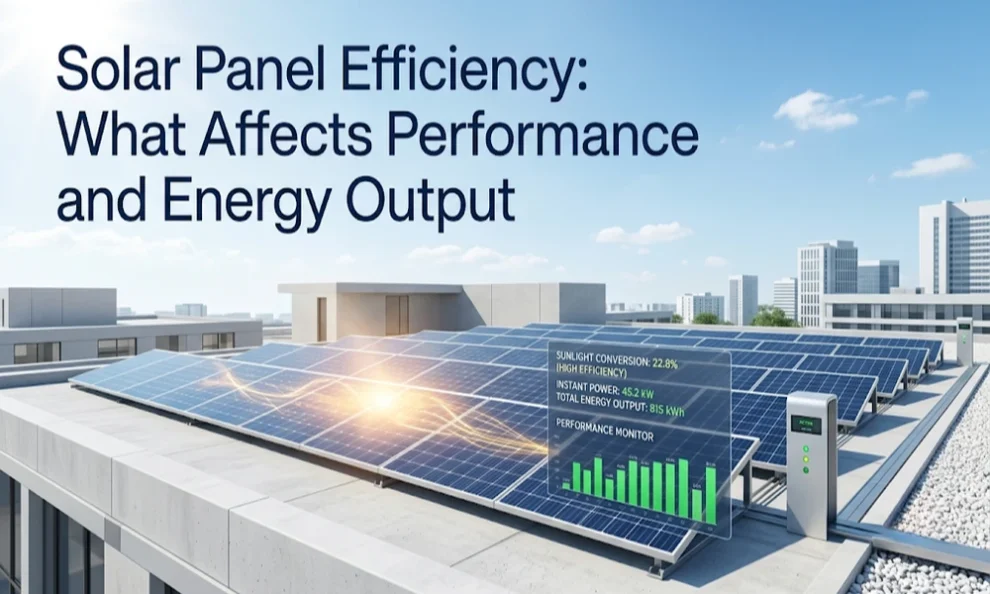

When you’re choosing solar panels, efficiency is one of the first things worth understanding properly. Solar panel efficiency simply refers to how much of the sunlight hitting a panel actually gets converted into usable electricity. A more efficient panel produces more power from the same amount of sunlight, which matters a lot when roof space is limited.
What Efficiency Actually Means
If a panel is rated 20 percent efficient, it means it converts roughly a fifth of the sunlight striking its surface into electricity. These numbers come from lab testing under Standard Test Conditions, a fixed temperature of 25°C and specific sunlight intensity. Real-world performance usually falls a bit below these lab ratings since conditions outside are rarely that consistent.
What Affects Real-World Output
Several things influence how much power your panels actually generate day to day. Sunlight intensity plays the biggest role, obviously, with cloudy days reducing output. Heat is another big factor; panels actually perform worse as they get hotter, which is a real consideration in India’s climate. Dust and dirt build up on the surface and block sunlight from reaching the cells, while poor wiring or an inefficient solar inverter can quietly eat into your system’s overall output too. Panel angle and orientation matter as well, along with partial shading, where even a small shaded section can drag down the performance of an entire panel.
Types of Solar Panel Technology
Monocrystalline panels, made from a single uniform silicon structure, tend to be the most efficient option available, though they cost more. Polycrystalline panels are slightly less efficient but more budget-friendly per watt. Thin film panels are cheaper and lighter but come with noticeably lower efficiency, generally in the 8 to 13 percent range. Crystalline silicon panels typically sit between 15 and 22 percent efficiency, while newer high-efficiency variants have pushed that number up to around 25 percent through improved cell design.
How to Choose High Efficiency Panels
A few things help when comparing options. Check both the efficiency rating and the temperature coefficient, since panels that handle heat better tend to hold their output more consistently. Look for brands offering strong 25-year performance guarantees, and consider newer high efficiency monocrystalline technology if your roof space is limited. Proper orientation and tilt also make a real difference, so it’s worth getting this right during installation rather than adjusting later. Leaving room in your system design for future panel additions is a smart move too, and working with an experienced installer generally means fewer efficiency losses from poor setup.
As a leading photovoltaic solar company in India, Waaree Energies offers high-efficiency mono PERC panels built specifically to perform well in Indian weather conditions. With over 25.8 GW in manufacturing capacity and decades of experience, Waaree backs its panels with solid product and performance warranties, making it a dependable choice whether you’re planning a small rooftop system or a larger solar investment.