






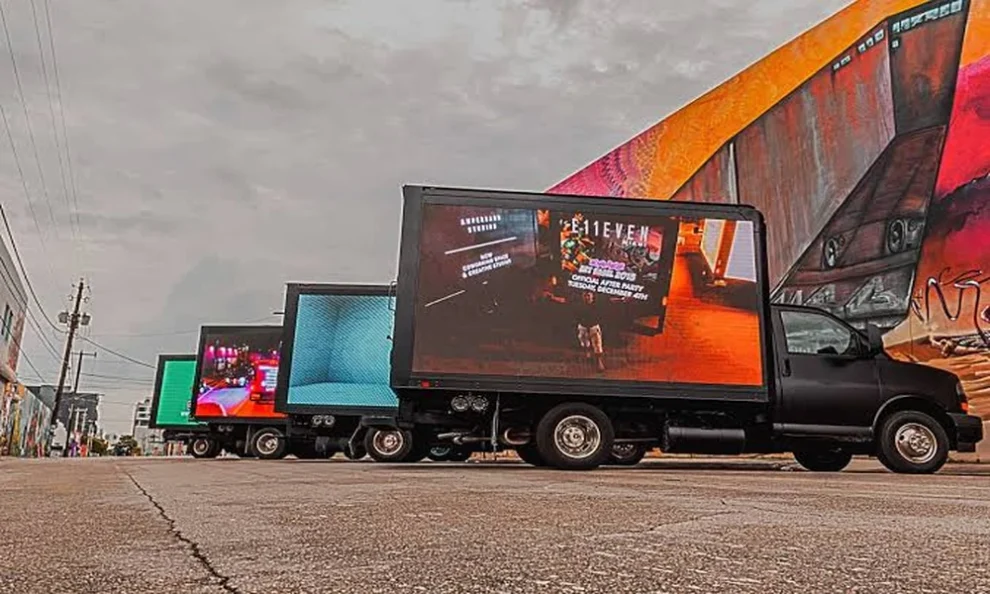

Advertising agencies running outdoor campaigns for multiple clients require a display format that operates according to each client’s specific audience requirements. This is rather than the availability constraints of fixed advertising inventory. A billboard truck service gives agencies direct operational control over where the display travels, when it activates across each client’s target zones, and what creative it carries at each point during the campaign window. That control structure allows agencies to manage multiple client campaigns within a single booking period.
Client placement decision control
A billboard truck service transfers placement decision authority directly to the advertising agency. This is rather than leaving coverage outcomes dependent on which fixed board positions are available near each client’s intended audience zone.
- Morning activation phases are assigned to the districts where each client’s target audience is present during commuter periods, placing the display within confirmed transit corridors rather than approximating the commuter audience from a nearby fixed board position.
- Midday phases cover the retail and commercial precincts where the target audience is active during trading hours, positioning the unit within the specific shopping corridors where foot traffic is highest rather than at a fixed position near the retail zone perimeter.
- Evening phases are directed toward the leisure and dining corridors where the target demographic gathers after working hours, covering the specific streets where audience concentration is highest during that activation period.
- Multi-day scheduling assigns different district territories to consecutive activation days, extending geographic coverage across the full campaign period rather than concentrating display presence within one area throughout the entire booking window.
Creative control across campaigns
- Product launch campaign segments carry launch messaging assigned to retail precinct routes during peak trading hours, matching the creative content to the purchase-oriented mindset of the shopper audience present in those zones during the activation window.
- Awareness campaign segments carry brand messaging assigned to residential corridor routes during morning and evening activation phases, positioning the message within the daily movement pattern of the target demographic rather than within a commercial environment where the audience is focused on immediate purchase activity.
- Remote creative updates apply across the full activation window without reprinting artwork or incurring additional production costs. This gives agencies real-time creative adjustment capability that printed outdoor formats cannot provide during an active campaign period.
Campaign delivery verification
A billboard truck service gives advertising agencies documented campaign delivery data that confirms actual placement coverage against each client’s campaign requirement. This is rather than projected impression estimates attached to a fixed board position. Activation logs record the specific route segments the unit covered for each client. They also record the time windows during which each segment was active, and the duration the unit spent within each zone across the full campaign day. That logged coverage data confirms whether the display reached each client’s intended audience concentration zones during the planned activation periods, giving agencies verifiable delivery records that support client reporting without relying on historical traffic estimates that may not reflect actual audience presence during the active campaign window.
A billboard truck service supports advertising agency campaigns by transferring placement control, creative management, and delivery verification directly to the agency. Each capability gives agencies measurable control over a specific campaign variable that standard outdoor media buying arrangements do not provide within fixed placement structures.